
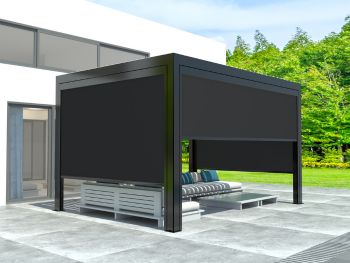
Motorized vs Manual Retractable Awnings: Which Suits Dubai Weather Better?

Choosing between motorized and manual retractable awnings feels like a small decision until you live with it through a Dubai summer. The wrong choice means daily hassle, faster wear, or an awning that simply can’t keep up with sudden weather shifts common in this region.
We install both types across homes, cafes, and hotels throughout the UAE, so we’ve seen exactly where each system shines and where it struggles. This guide breaks down the real differences so you can pick the retractable shade system that actually fits your lifestyle and budget.
How Manual Retractable Awnings Perform in Dubai Heat
Manual retractable awnings use a hand crank to extend or retract the canopy. They cost less upfront and have fewer mechanical parts that can fail. For smaller patios or balconies with light daily use, a manual system often does the job perfectly well without added complexity.
The drawback shows up during Dubai’s sudden sandstorms or wind gusts. Manual awnings have no automatic response, so someone has to physically retract the canopy before wind damage occurs. If nobody’s home or nobody notices in time, the fabric or frame can take real damage fast.
Why Motorized Awnings Handle Sudden Weather Better
Motorized awnings respond to changing conditions without you lifting a finger. Most systems we install include weather sensors that detect wind speed and automatically retract the canopy before gusts cause damage. This matters enormously in Dubai, where wind can pick up with very little warning.
Remote-controlled awnings also let you adjust shade coverage throughout the day without walking outside in peak heat. For homeowners and restaurant operators managing multiple awnings across a property, one remote or app controls everything, saving real time during busy service hours or sudden weather changes.
Comparing Wind Resistance Between the Two Systems
Motorized systems generally hold up better in wind, mostly thanks to the built-in sensors and how fast they retract. A motor can pull the canopy in within seconds, way faster than turning a hand crank. That speed matters a lot during Dubai’s sudden wind events, the kind that hit near sunset or roll in with a shamal.
Manual awnings can still perform well in moderate wind if retracted proactively. We recommend manual systems only for properties where someone checks the weather forecast daily and can respond quickly. Otherwise, the automation built into motorized retractable awnings offers meaningfully better long-term protection.
Maintenance Differences You Should Know Before Buying
Manual awnings keep things simple. Fewer moving parts means fewer things that can go wrong. A crank system rarely breaks down, and when it does need fixing, repairs tend to be cheap. That’s what makes manual awnings appealing if you want reliable shade without worrying about upkeep down the line.
Motorized awnings ask a little more of you, usually a motor and sensor check once or twice a year. It’s a small trade-off for the convenience. We offer maintenance packages for our motorized awnings Dubai clients so everything keeps running the way it should, without any surprise repair bills.
Energy Savings and Comfort Across Both Awning Types
Both manual and motorized retractable awnings cut down on solar heat hitting your windows and patio, which brings indoor cooling costs down noticeably through Dubai’s long summers. That savings comes from the shade itself, not from how the awning gets extended, so either system delivers roughly the same benefit here.
Where motorized really pulls ahead is consistency. It adjusts automatically as the sun moves through the day, even if nobody’s home to notice. A manual awning only shades well when someone actually remembers to move it, and that gap can leave your indoor temperature swinging more than you’d like over a full day.
Which System Fits Cafes and Restaurants Better
For hospitality businesses, motorized awnings usually make more sense. Staff can adjust shade quickly during busy service without leaving the counter, and automatic wind response protects the investment during unexpected weather. Guests also notice the smooth, professional operation compared to manual cranking in front of a full patio.
Smaller residential balconies with occasional use can still do well with manual systems. We help each client weigh usage frequency, budget, and how much daily attention they can realistically give the awning before recommending one system over the other.
Let Us Help You Choose the Right Awning System
Both motorized and manual retractable awnings have a place in Dubai’s climate. Your choice really comes down to usage frequency, budget, and how much automation fits your daily routine. We install and service both, so our recommendation is based on your property, not a one-size-fits-all pitch.
Call us at +971501457763 or email info@shadepulse.ae for a free site assessment. We’ll bring real fabric and frame samples so you can actually see and feel what you’re choosing between.
Frequently Asked Questions
Do motorized awnings work during a power outage?
They do, thanks to the manual override crank most of them come with. So, if the power drops, you just retract or extend the canopy by hand instead, and it still stays safe from wind damage even with the motor out of the picture.
How much wind can a retractable awning handle before retracting?
It depends on the model, but most quality retractable awnings in Dubai are rated to handle winds up to around 30 to 40 kilometers per hour before they retract automatically. Past that point, the wind sensors on motorized systems tell the motor to pull the canopy in right away, just to keep things safe.
Is it possible to upgrade a manual awning to motorized later?
Often, yes, though it really comes down to whether your existing frame can support it. Some manual frames can take a retrofit motor kit without much trouble, while others end up needing a full frame swap. We take a look at your current setup during a site visit and tell you honestly which route makes the most sense for your budget.
How often should retractable awning fabric be replaced?
In Dubai’s climate, good awning fabric usually lasts somewhere between 8 and 12 years before the sun and heat start noticeably fading the color or wearing down the material. Regular cleaning and pulling it in during rough weather helps it last longer, while fabric left exposed constantly tends to need replacing sooner.
Can retractable awnings be installed on any type of building?
Pretty much, yes. Villas, apartment balconies, storefronts, it usually works as long as there’s enough wall or ceiling support to hold the mounting brackets. We take a look at your building’s structure during the site visit so we can pick the right mounting method and get the awning sized correctly for your space.
Get A Free Quote