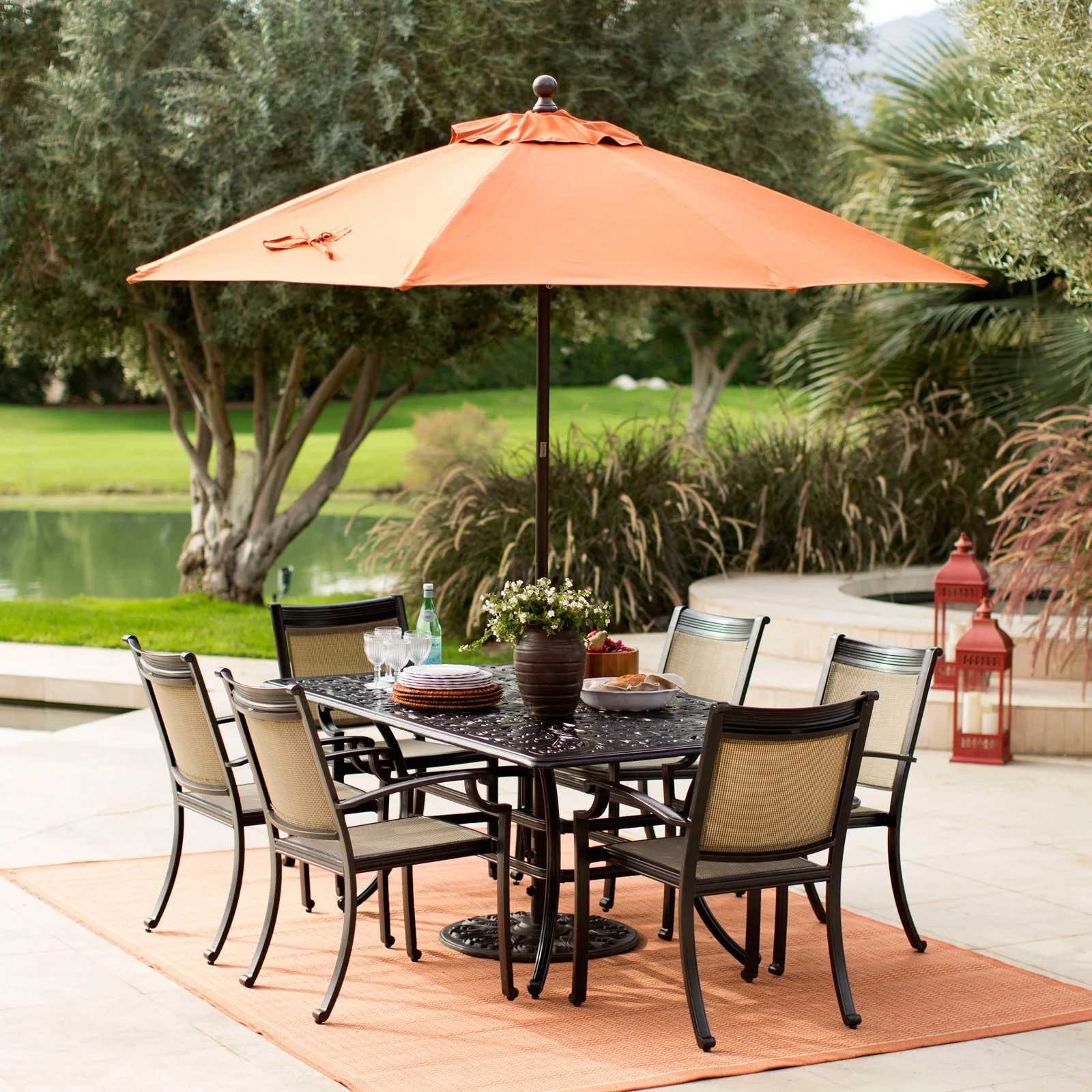
You set up your patio, arrange the chairs, open the umbrella, and then the wind picks up. Suddenly, your beautiful setup becomes a safety hazard. A tipping umbrella can damage furniture, injure someone, or end up three gardens away. If you manage a café terrace, a resort pool deck, or your own backyard, you know this stress well. An outdoor umbrella that is not properly secured is not just inconvenient. It is a real risk. The good news is that securing your outdoor umbrella against wind is not complicated.
Why Wind Puts Your Outdoor Umbrella at Risk
An open umbrella acts like a sail. The larger the canopy, the more surface area wind has to push against.
Even a moderate gust can tip an umbrella that is not properly weighted or anchored. In places like the UAE, where hot dry winds and sudden gusts are part of daily life, this is not a rare problem. It happens regularly and without much warning.
The risks go beyond inconvenience. A falling umbrella can hit a person, damage outdoor furniture, or crack a tile surface. For businesses, it can also create liability issues.
Understanding what makes an umbrella vulnerable is the first step toward fixing the problem.
Umbrella Base Stability: The Foundation of Everything
The base is the most important part of your wind protection setup. Without a solid, heavy base, nothing else matters.
Here is what you need to know about umbrella base stability:
Weight matters a lot. For a standard 9-foot patio umbrella, most experts recommend a base that weighs at least 50 pounds. For larger commercial umbrellas, you need even more weight. A light base simply will not hold under pressure.
Fillable bases work well. Bases that you fill with sand or water are popular because they are easy to move when empty but heavy enough when full. Always fill them completely and check them regularly as water can evaporate in hot climates.
Ground-mounted bases offer the best stability. If you have a permanent outdoor space, consider a base that anchors directly into the ground or a concrete surface. These give you the most reliable hold in windy conditions.
Match the base to the umbrella size. A small base under a large umbrella is asking for trouble. Always check the manufacturer’s recommended base weight for your specific umbrella size.
Shade Pulse designs outdoor umbrellas with proper base compatibility in mind, because they understand that a beautiful umbrella is only useful when it stays standing.
Outdoor Umbrella Positioning: Work Smarter, Not Harder
Where you place your umbrella changes how much wind force it actually faces.
Place it near a windbreak when possible. A wall, fence, hedge, or building on the windward side can significantly reduce the force of wind hitting your umbrella. You do not need complete shelter. Even partial protection helps.
Avoid open corners and raised platforms. Wind speeds up around corners of buildings and on elevated surfaces like rooftop terraces or raised decks. These spots are higher risk and need extra-heavy bases or ground anchoring.
Tilt the canopy slightly into the wind. Many patio umbrellas have a tilt function. Angling the canopy into the wind, rather than letting it sit flat, reduces the surface area the wind can push against. This small adjustment makes a real difference.
Do not position umbrellas in isolation. A single umbrella standing alone in an open space faces wind from every direction. Where possible, you can cluster seating areas and use multiple umbrellas together because grouped setups handle wind better than solo installations.
What to Look for in Wind Resistant Patio Umbrellas
Not all umbrellas handle wind equally. If you live somewhere with regular wind, or you manage a commercial outdoor space, you need to choose your umbrella carefully.
Here is what separates wind resistant patio umbrellas from standard ones:
Vented canopies. A vent at the top of the canopy lets wind pass through instead of building up pressure underneath. This single feature dramatically reduces the chance of tipping. If you are buying an umbrella for a windy location, a vented canopy is non-negotiable.
Strong pole materials. Look for aluminum or fiberglass poles rather than cheap hollow metal. These materials flex slightly under pressure instead of snapping. A rigid pole that cannot flex will break. A well-engineered pole bends and recovers.
Reinforced ribs. The ribs hold the canopy open. In cheaper umbrellas, ribs bend and break when wind catches the canopy. Look for thicker, reinforced ribs made from fiberglass or heavy-gauge aluminum.
Quality fabric. Canopy fabric should resist water, UV rays, and wind pressure. Solution-dyed acrylic fabric is a strong choice. Avoid lightweight polyester for anything exposed to real weather.
Shade Pulse builds heavy duty patio umbrellas specifically for demanding outdoor environments. Their designs include features like vented canopies and engineered pole systems because they build for the UAE climate where heat, sun, and wind all work against standard outdoor furniture.
Outdoor Umbrella Safety Tips You Should Use Every Day
Good habits keep your umbrella safe over the long term. These outdoor umbrella safety tips take seconds to follow and save you from costly damage.
Close your umbrella when you are not using it. This is the single most important habit. A closed umbrella has almost no wind resistance. An open one left unattended is one gust away from becoming a problem.
Close it before a storm. Watch the forecast and act early. Do not wait until the wind is already strong. By then it may be too late to close the umbrella safely.
Check the base weight before each season. If you use a fillable base, check that it is still full. Water evaporates and sand can shift. A base that was heavy enough last summer may not be adequate now.
Inspect your umbrella regularly. Look at the ribs, the pole joint, and the canopy fabric. Small cracks or bent ribs are warning signs that your umbrella may not hold up under wind pressure.
Secure the canopy when closed. Use the Velcro strap or tie that came with your umbrella to keep the canopy wrapped tight when it is closed. A loose canopy can catch wind even when the umbrella is down.
When to Open and When to Close Outdoor Umbrellas
Close your outdoor umbrella when:
Open your outdoor umbrella when:
How Shade Pulse Approaches Wind-Ready Outdoor Umbrella Design
We understand that outdoor spaces in this region face specific challenges. The heat is intense, the sun is harsh, and the wind can change quickly.
Our outdoor umbrellas are built with those conditions in mind. From vented canopy designs to heavy-duty structural materials, Shade Pulse focuses on performance, not just appearance.
If you are looking for outdoor umbrellas especially for commercial spaces, hospitality venues, or any setup where safety and durability matter, connect with Shade Pulse.

March 20, 2026